
Every place carries traditions and stories that never make it into a typical travel guide, and ALLMYNE believes those details are half the reason to go. Our Culture Hub series takes a closer look at the destination spotlighted in-app for ALLMYNE Pro members that month. This month, we’re heading to …
Vietnam.
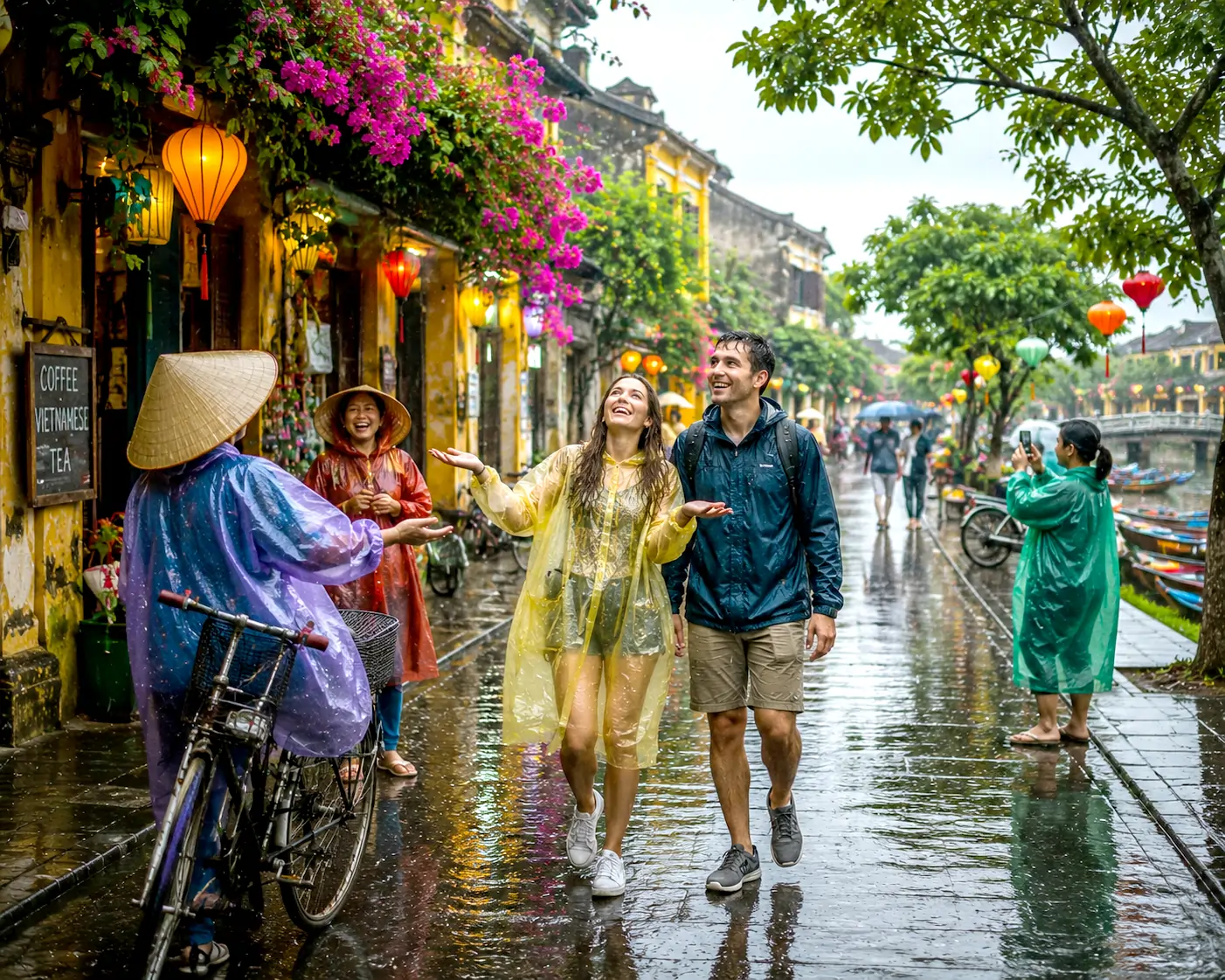
Tell someone you’re visiting Vietnam in July and you’ll usually get the same reaction: isn’t that the rainy season? It is; but “rainy season” in Vietnam doesn’t mean gray skies and canceled plans. It means a very specific and livable rhythm; and in two very different corners of the country, it’s arguably the best month of the year to go.
What Rainy Season Actually Feels Like
Vietnam’s wet season follows a rhythm, not a mood. Mornings are typically clear and bright (the golden window for anything outdoors), and clouds build through the afternoon before a short, intense downpour arrives and clears by evening. It’s rarely an all-day gray sky. It’s a schedule; and once you know it, it stops feeling like an obstacle and starts feeling like a built-in siesta.
That rhythm plays out completely differently depending on where in Vietnam you are, and July happens to be peak season for two of the country’s most striking landscapes.
Up in the Mountains: Sapa and Mu Cang Chai’s Green Season
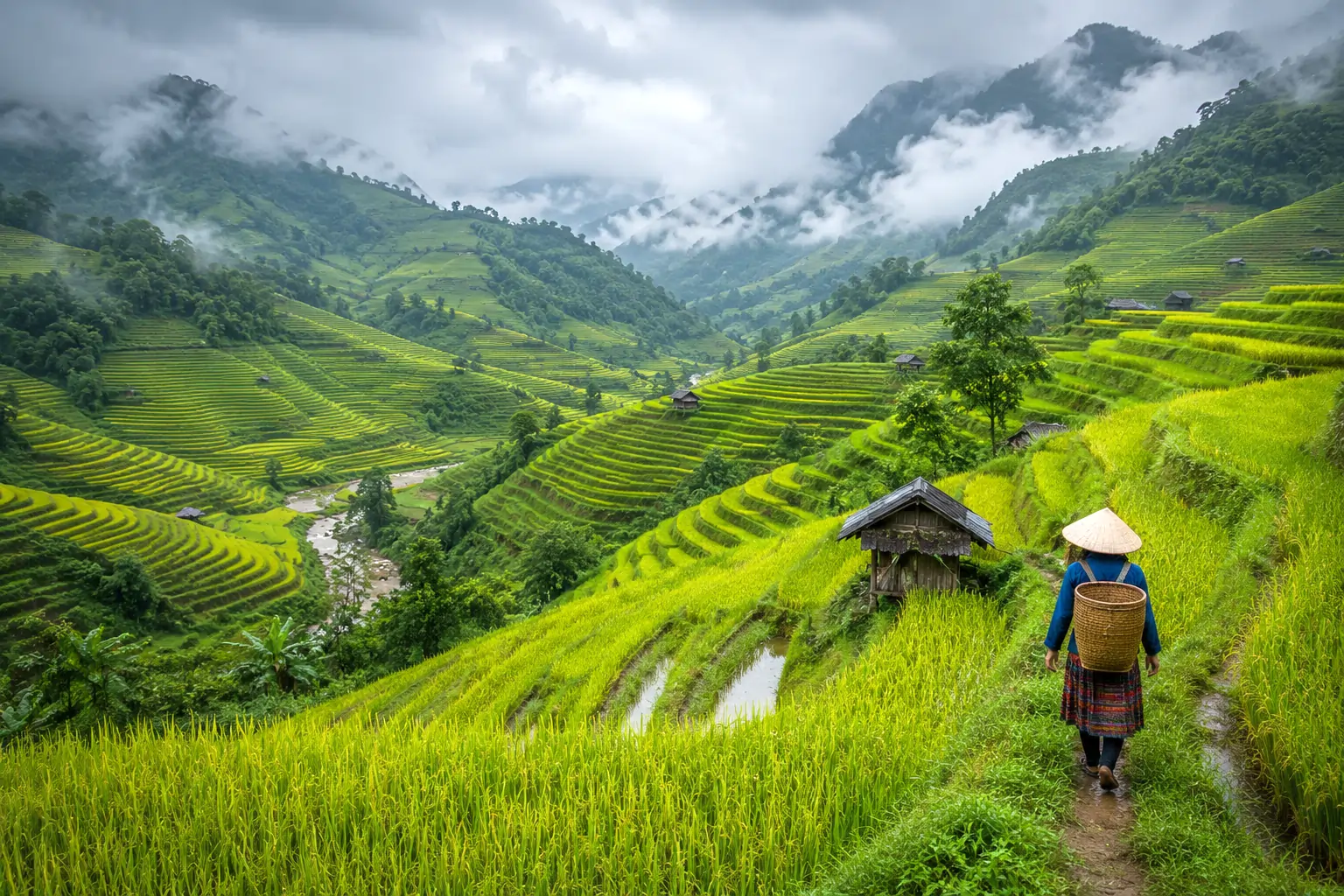
In the far north, July sits inside what locals call the “green season.” The terraced rice fields around Sapa’s Muong Hoa Valley turn a vivid, almost unreal green, waterfalls run at their fullest, and the mist that rolls through the valleys in the early morning is part of the scenery.
Further east, Mu Cang Chai is going through its own version of the same transformation — what’s known locally as the “water-pouring season,” when farmers flood the terraces ahead of planting, turning the hillsides into a mosaic of mirrored, light-catching pools before the rice takes root and the fields shift into deep green through July and August.
Trekking here in the rain does mean muddier, slipperier trails, so good footwear and a proper rain layer matter more than usual. But the payoff is real: the terraces are more dramatic in this window than at almost any other time of year, and the crowds that show up for the golden harvest season in September and October haven’t arrived yet.
Down in the Delta: The Mekong at Its Fullest
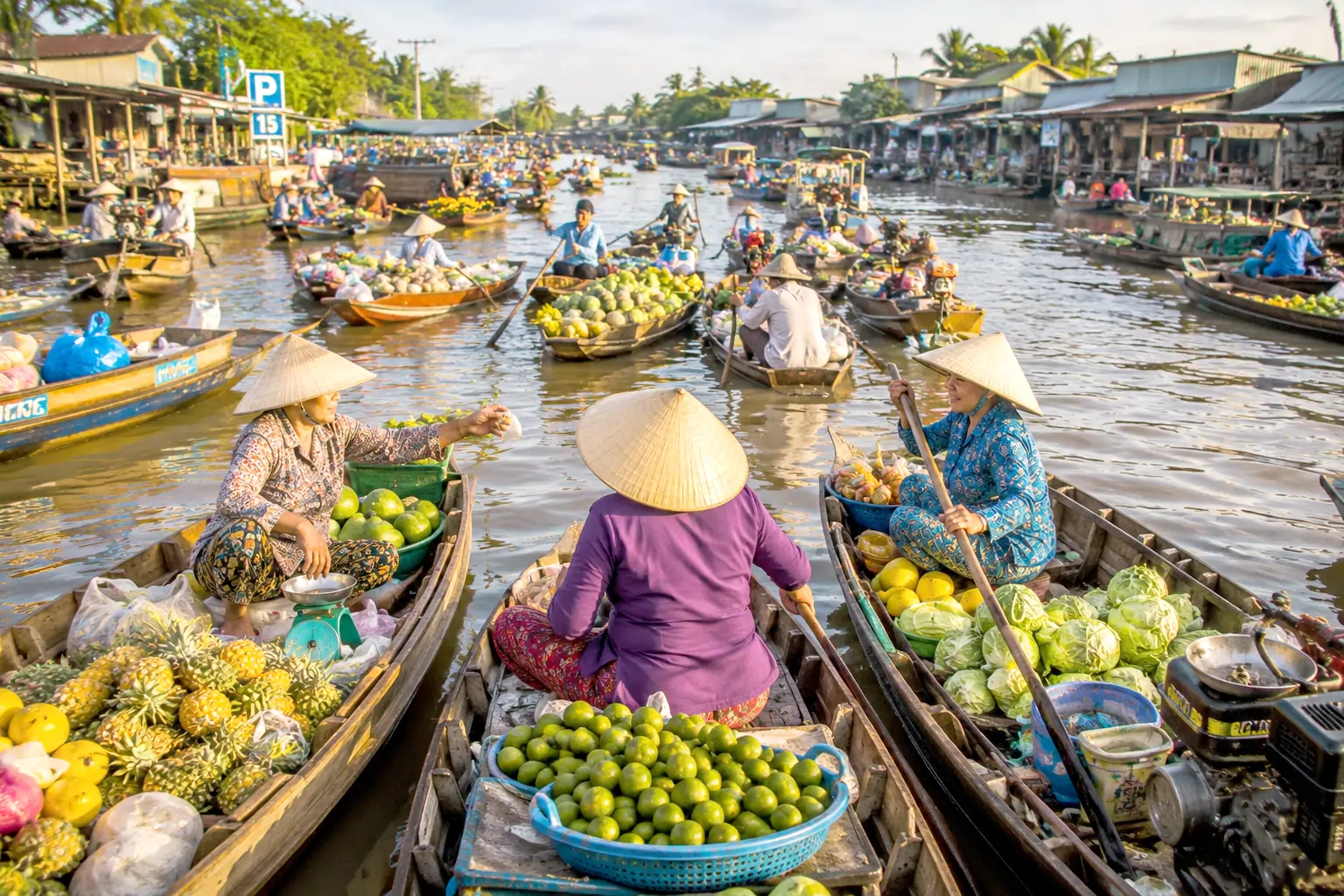
Sixteen hundred kilometers south, July means something entirely different. The Mekong Delta is deep in its rainy season, and the canals, orchards, and floating markets are arguably at their most alive.
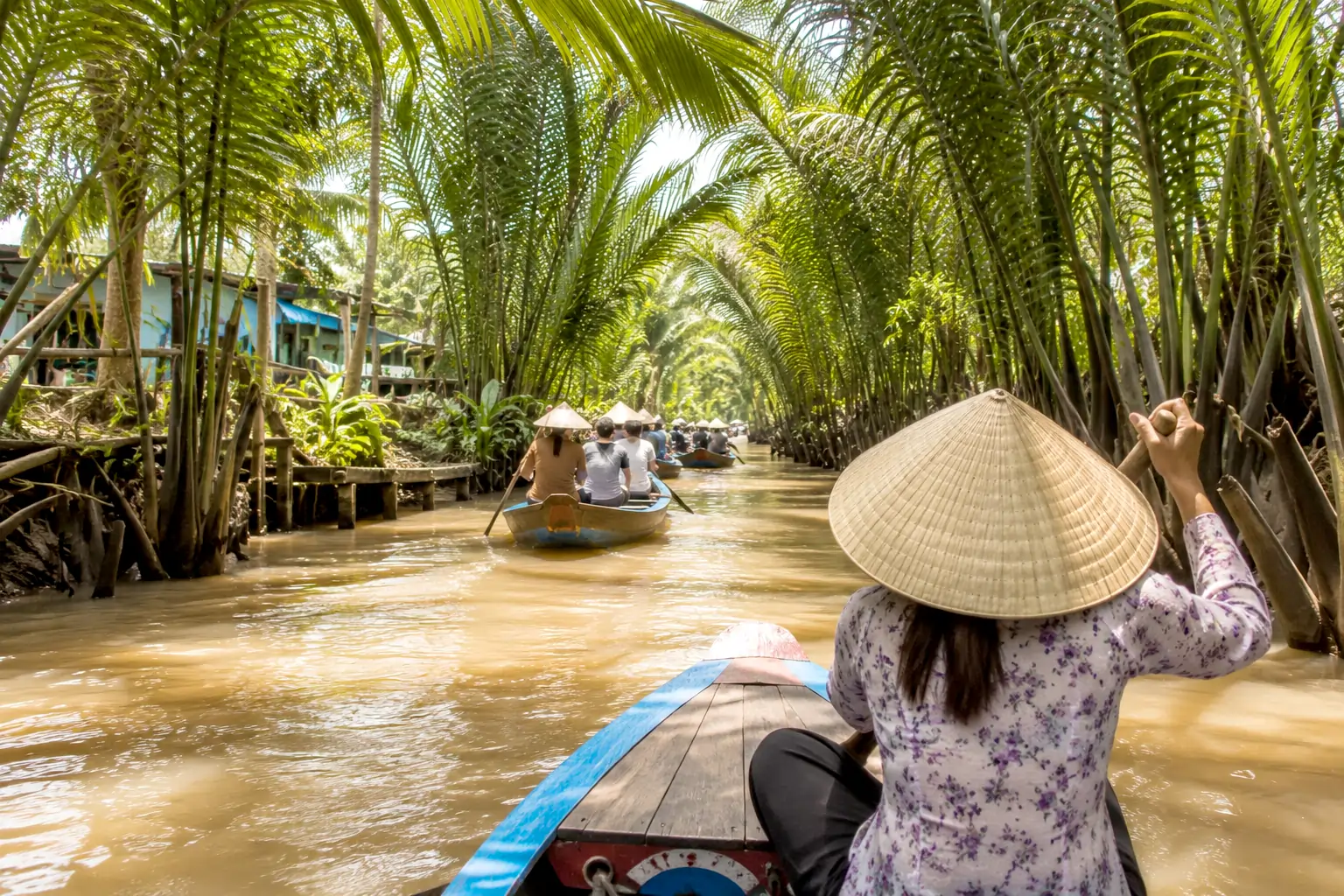
The Cai Rang and Phong Dien floating markets near Can Tho run on their own clock, regardless of the season; boats gather between roughly 5 and 9 in the morning, selling everything from pineapple to bowls of hot noodle soup, and that’s still the prime time to go, rain or shine. What changes in July is everything around the markets: the canals run fuller, fruit orchards hit peak harvest, and the whole Delta takes on a lushness that the dry season simply doesn’t have. The afternoon shower, when it comes, is less an interruption than an excuse to duck into a riverside café for a bowl of hủ tiếu and wait it out.
Making the Rain Work For You
A few habits separate travelers who love this month from the ones who fight it:
- Do everything outdoors before noon. Floating markets, canal boat rides, and rice terrace treks all belong in the clear morning window.
- Treat the afternoon shower as a scheduled break, not a scheduling problem. A covered market, a café, or a guesthouse porch is exactly where you’re supposed to be for that hour.
- Pack for wet trails, not wet days. A light rain jacket and shoes with real grip matter far more in the mountains than a full rain suit.
- Go in with lower expectations for photography midday, higher for early morning and just after a storm. Locals and photographers both point to the clarity right after rain as the best light of the day.
Where ALLMYNE Fits In
A trip that swings between mountain treks in the north and canal life in the south lives or dies on timing, knowing which morning window belongs to which activity and having a backup plan ready for the afternoon without scrambling for it in the rain. Travelers using ALLMYNE are building exactly that kind of flexible day-by-day plan, with pinned stops for both the early activity and its rainy-day backup, so a downpour changes the schedule instead of ruining it.
Vietnam in July isn’t the easy month. But for travelers willing to build a day around a predictable afternoon storm, it’s often the most vivid one: greener mountains, fuller rivers, and a real slice of how the country actually lives with its own weather.
If you’re interested in knowing more hidden gems and hands-on local experiences from Vietnam, upgrade to Pro on the ALLMYNE app to access our exclusive Featured Content Hub, rife with a curated artisan directory, captivating videos, and immersive itineraries.